A simulation generalist for problems nobody else will take.
FEM. DEM. LBM. Whatever the physics needs.
I don't have a fixed research focus. I go where the numerical problem is inconvenient enough that most people won't touch it — magnets, powders, bioreactors — and build models that capture how physical systems actually behave.
Niches I've worked my way into
not a specialty, just where the last hard problems happened to be
Materials Science: Permanent Magnets
Simulating ferromagnetic materials across multiple scales — from density functional theory to finite-element micromagnetism. Optimizing Nd-Fe-B magnets and developing rare-earth-free alternatives.
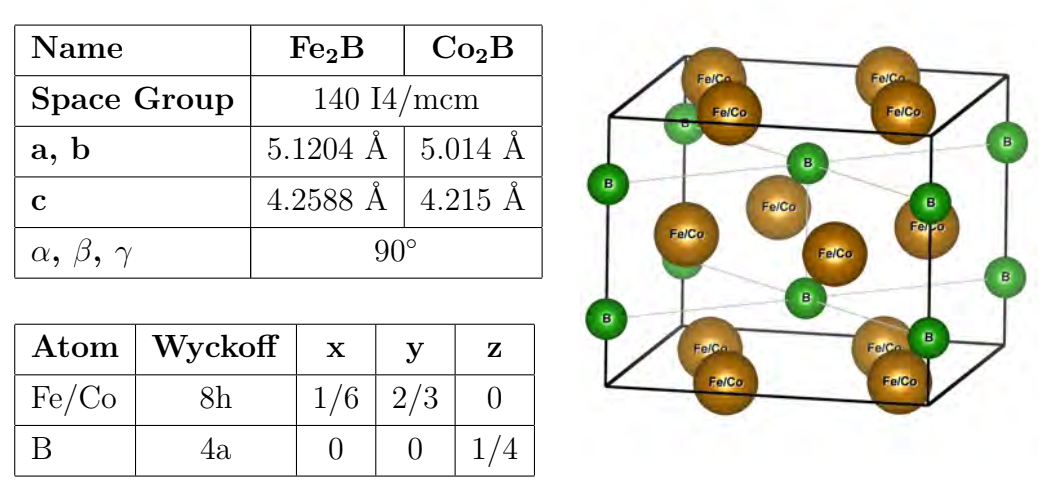
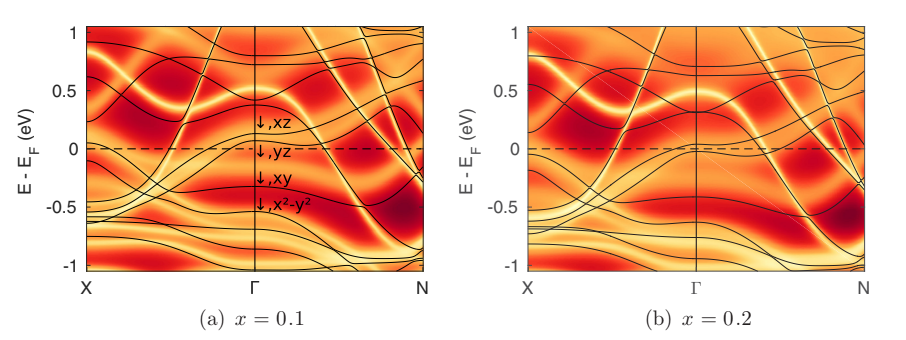
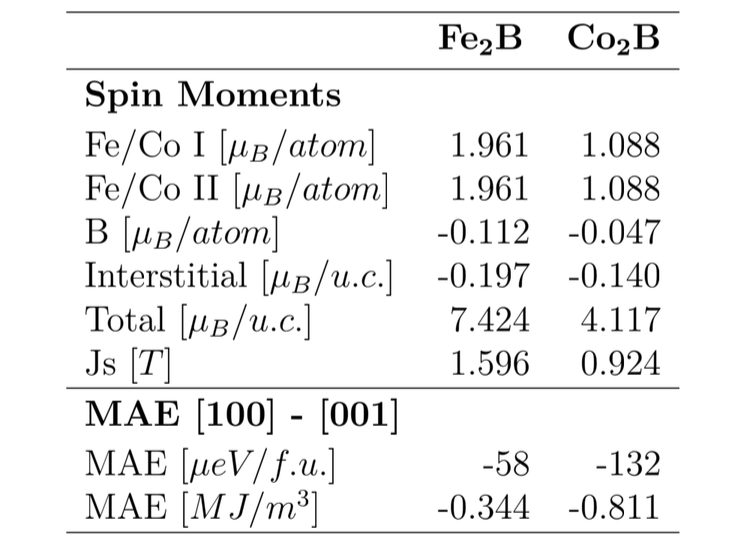
Fe2B/Co2B magnetic properties from DFT calculations — [1]
simulation:Finite-element micromagnetics
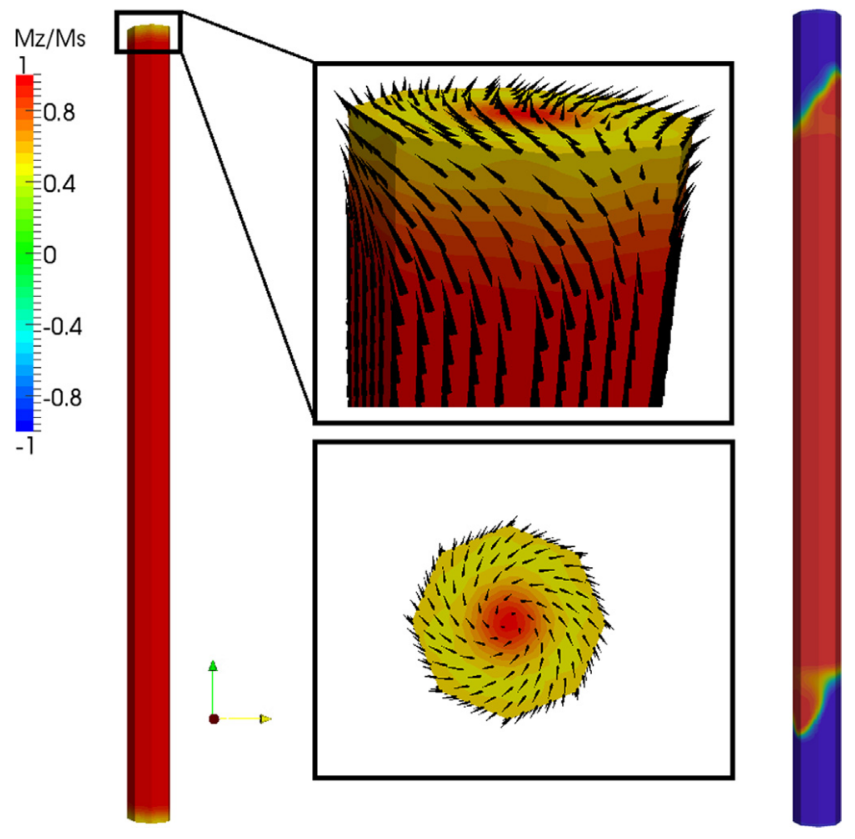
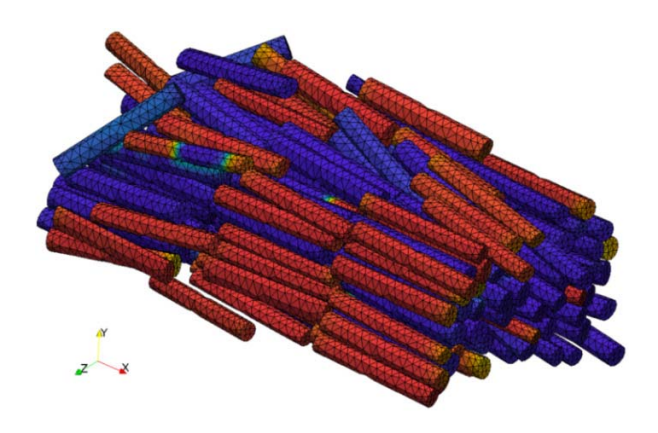
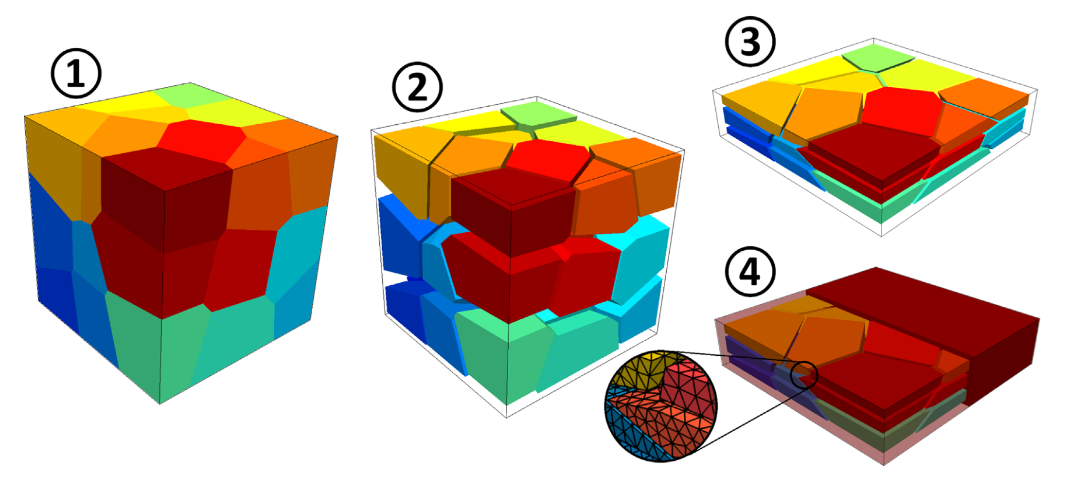
Magnetic moments in a Co nanorod — [3]Meshed packed nanorod structure — [5]Creation of a realistic grain and grain boundary structure from Voronoi cells — [3]
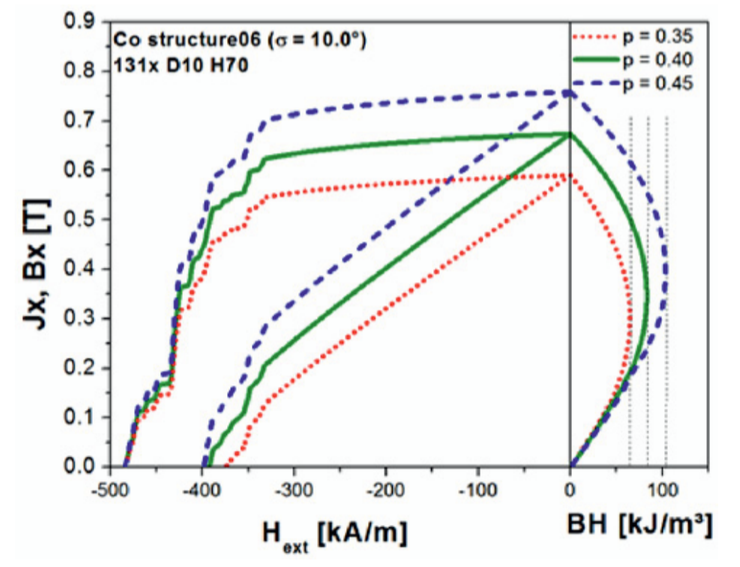
data:Hysteresis loop, energy density product
Hysteresis loop and energy density product for packed Co nanorods — [4]
references
P. Toson, "Multiscale modelling of advanced hard magnets," TU Wien, 2015. doi: 10.34726/HSS.2015.27907.
A. Edström et al., "Magnetic properties of (Fe1-xCox)2B alloys and the effect of doping by 5d elements," Phys. Rev. B - Condens. Matter Mater. Phys., vol. 92, no. 17, 2015. doi: 10.1103/PhysRevB.92.174413.
P. Toson, G. A. Zickler, and J. Fidler, "Do micromagnetic simulations correctly predict hard magnetic hysteresis properties?," Phys. B Condens. Matter, vol. 486, pp. 142–150, Apr. 2016. doi: 10.1016/j.physb.2015.10.013.
P. Toson, W. Wallisch, A. Asali, and J. Fidler, "Modelling of Packed Co Nanorods for Hard Magnetic Applications," EPJ Web Conf., vol. 75, p. 03002, 2014. doi: 10.1051/epjconf/20147503002.
P. Toson, A. Asali, W. Wallisch, G. Zickler, and J. Fidler, "Nanostructured Hard Magnets: A Micromagnetic Study," IEEE Trans. Magn., vol. 51, no. 1, pp. 1–4, Jan. 2015. doi: 10.1109/TMAG.2014.2359093.
Discrete-element models of continuous powder unit operations: feeding, blending, tableting. From powder characterization to content uniformity in the final product.
DEM · digital twins · calibration
theory → simulation → output, step by step
data:Powder Characterization Experiments
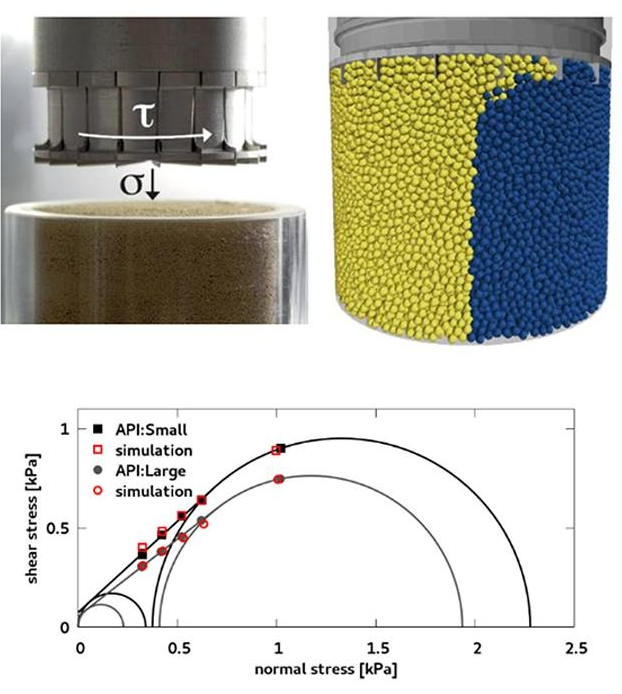
Comparison of experimental shear cell tests with DEM simulations — [1]
simulation:DEM Calibration
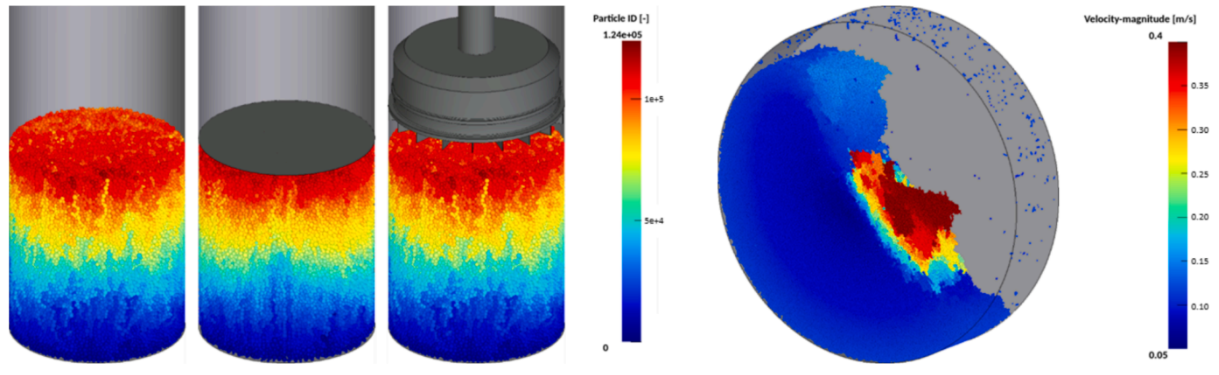
DEM calibration with compaction, shear cell and dynamic angle of repose — [3]
data:Contact Model Parameters
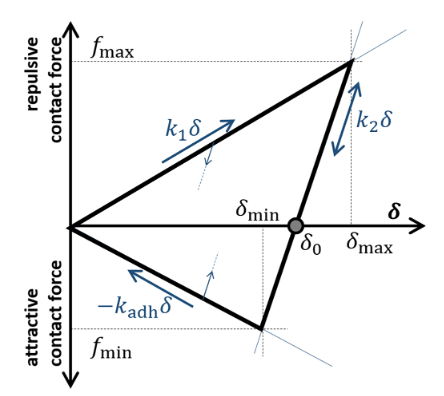
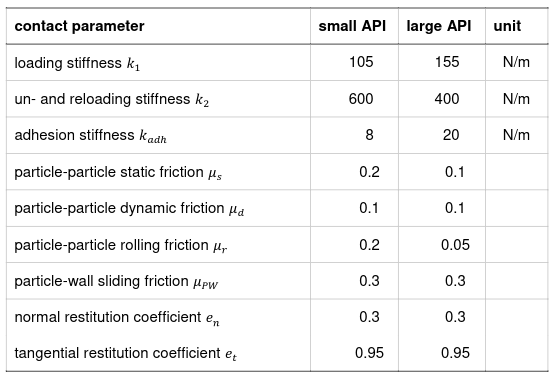
Cohesive DEM contact force model — [2]DEM contact parameters for blends with different API batches — [1]
simulation:DEM Process Simulation
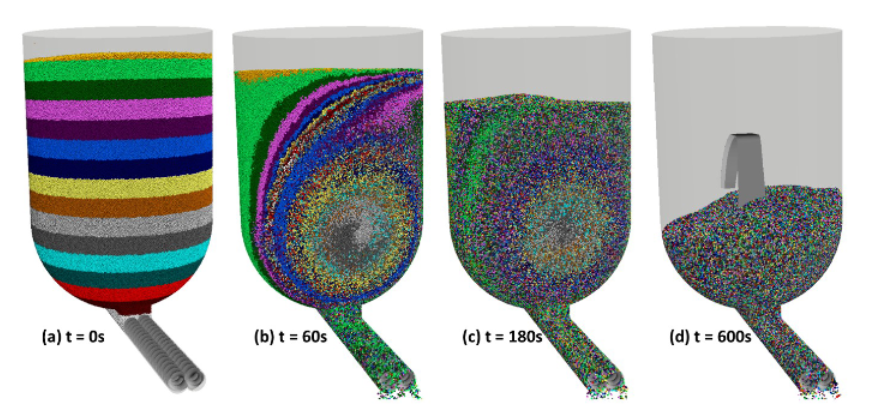
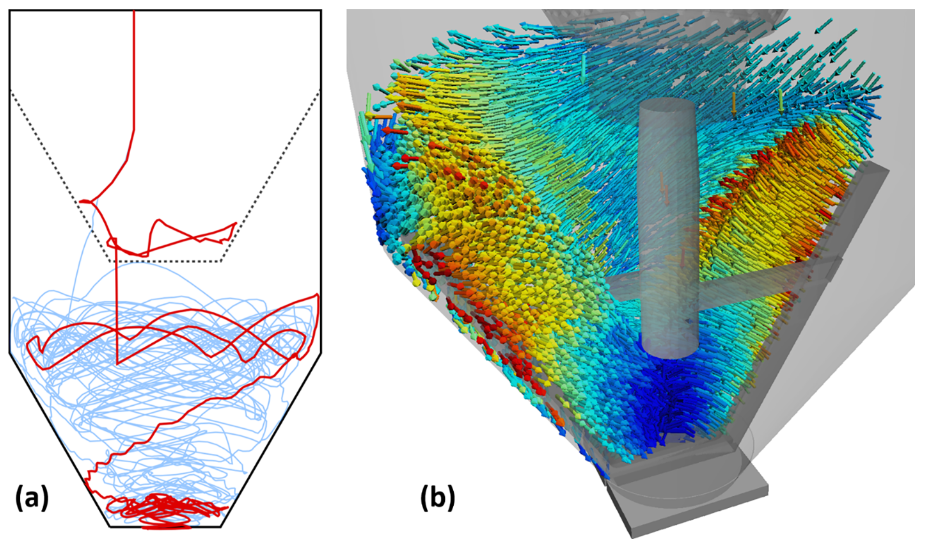
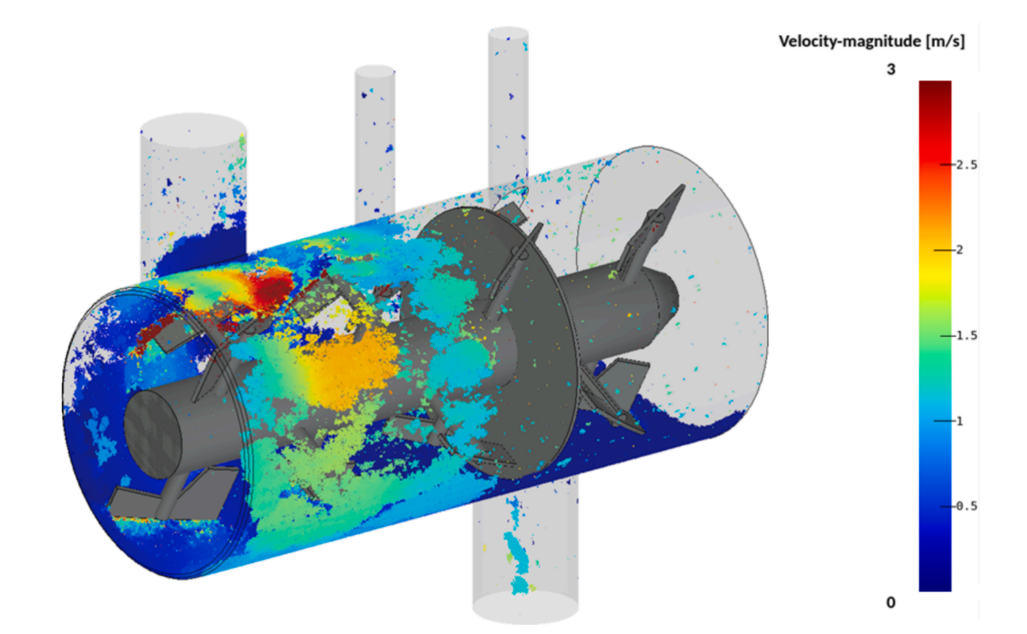
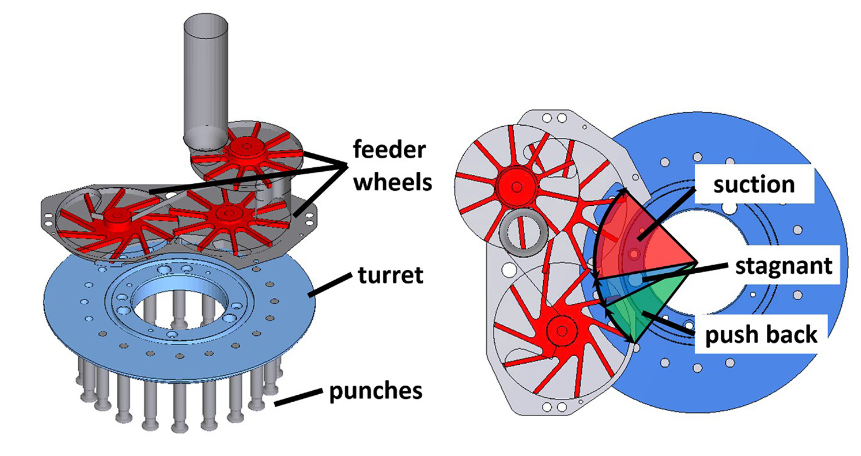
Twin-screw feeder visualization with initial material layers — [4]Particle trajectories and velocity field in a vertical continuous blender — [2]Particle velocities in a horizontal continuous blender — [3]CAD model of a tablet press — [5]
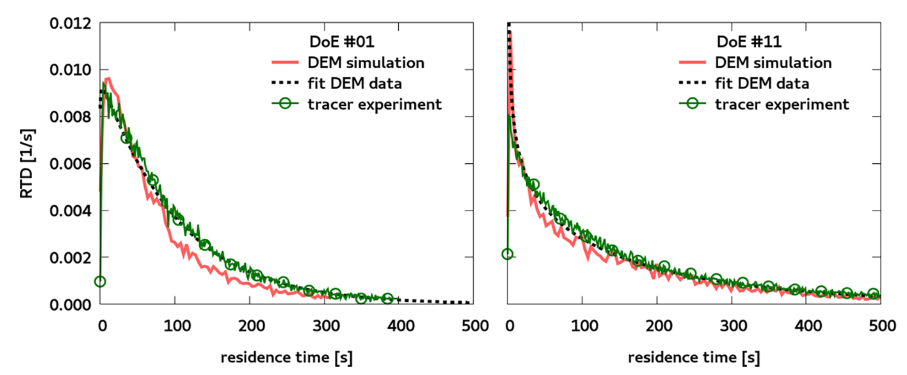
data:Residence Time Distribution
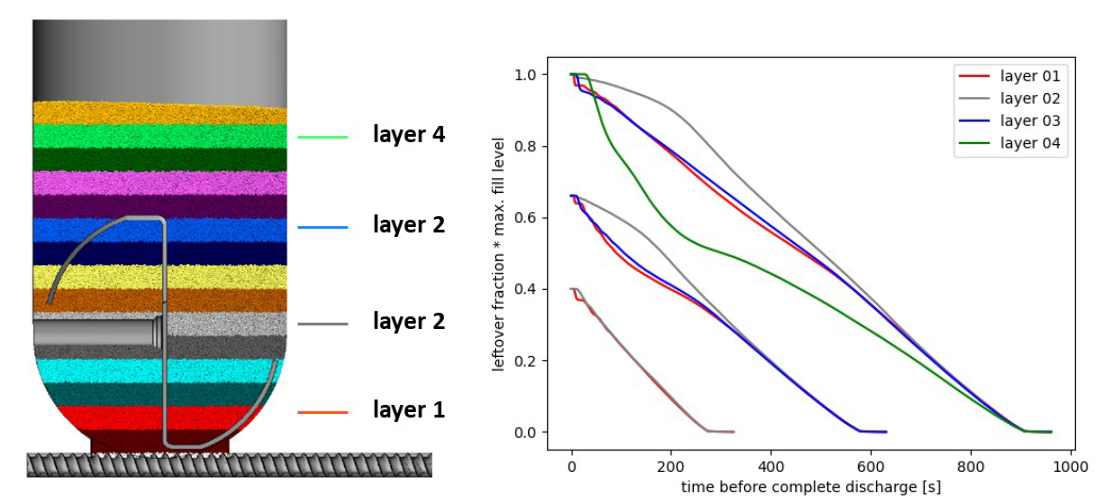
Residence time distribution of individual material layers for feeding processes with different initial fill levels — [4]Validation of residence time distribution curves of a mixing device — [2]
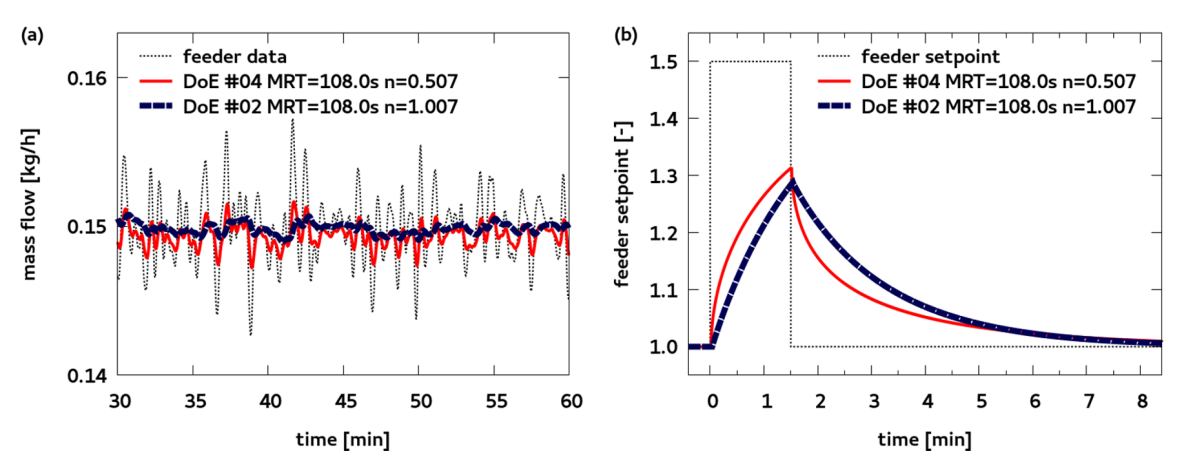
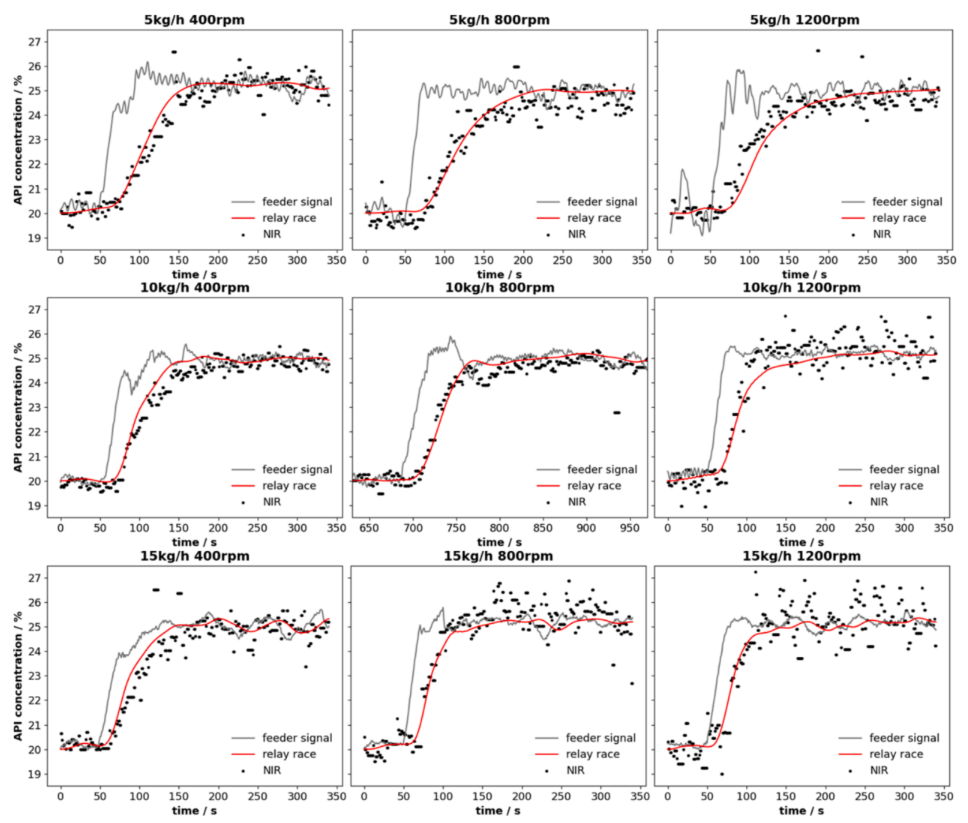
simulation:Flowsheet Model
Damping of feeder fluctuations and setpoint control response — [2]Model validation with step experiments in API concentration — [6]
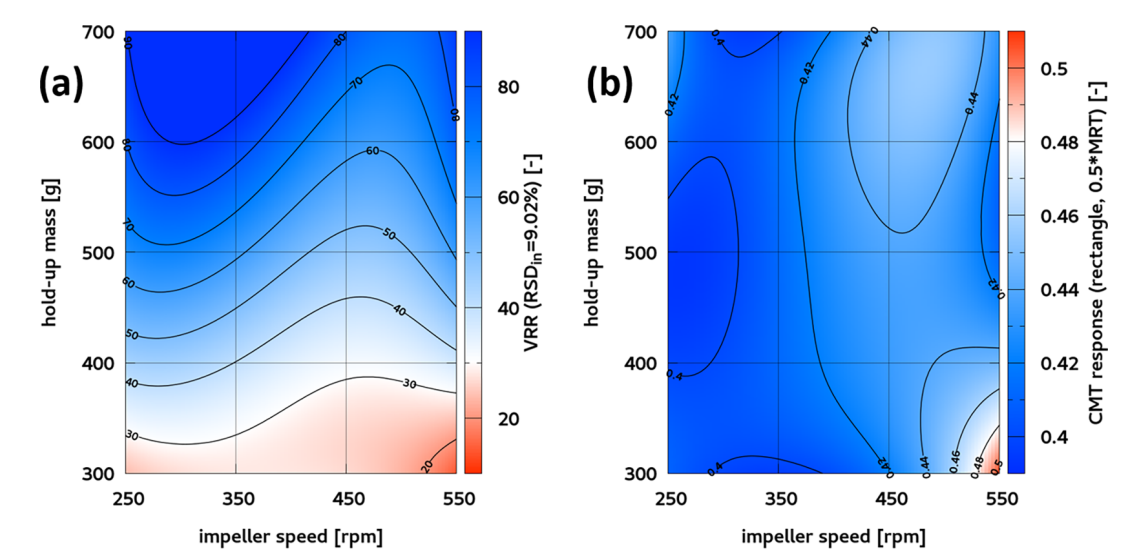
data:Product Quality
Analysis of the CQA (critical quality attribute) API content uniformity with the damping behavior and pulse response in the operating range — [2]
references
P. Toson et al., "Continuous mixing technology: Validation of a DEM model," Int. J. Pharm., vol. 608, p. 121065, Oct. 2021. doi: 10.1016/j.ijpharm.2021.121065.
P. Toson et al., "Detailed modeling and process design of an advanced continuous powder mixer," Int. J. Pharm., vol. 552, no. 1–2, pp. 288–300, Dec. 2018. doi: 10.1016/j.ijpharm.2018.09.032.
D. Jajcevic et al., "Development of a high-fidelity digital twin using the discrete element method for a continuous direct compression process. Part 1. Calibration workflow," Int. J. Pharm., vol. 666, p. 124796, Dec. 2024. doi: 10.1016/j.ijpharm.2024.124796.
P. Toson and J. G. Khinast, "A DEM model to evaluate refill strategies of a twin-screw feeder," Int. J. Pharm., vol. 641, p. 122915, Jun. 2023. doi: 10.1016/j.ijpharm.2023.122915.
E. Siegmann, S. Enzinger, P. Toson, P. Doshi, J. Khinast, and D. Jajcevic, "Massively speeding up DEM simulations of continuous processes using a DEM extrapolation," Powder Technol., vol. 390, pp. 442–455, Sep. 2021. doi: 10.1016/j.powtec.2021.05.067.
D. Jajcevic et al., "Development of a high-fidelity digital twin using the discrete element method for a continuous direct compression process. Part 2. Validation of calibration workflow," Int. J. Pharm., vol. 666, p. 124797, Dec. 2024. doi: 10.1016/j.ijpharm.2024.124797.
My own Lattice-Boltzmann code has gone dormant — these days I mostly write software to set up standardized mixing simulations. In between, there's room for one-off exotics like this filtration process.
LBM · mixing processes · bioreactors
theory → simulation → output, step by step
data:Geometry + Fluid Rheology
simulation:Lattice-Boltzmann Flow Simulation
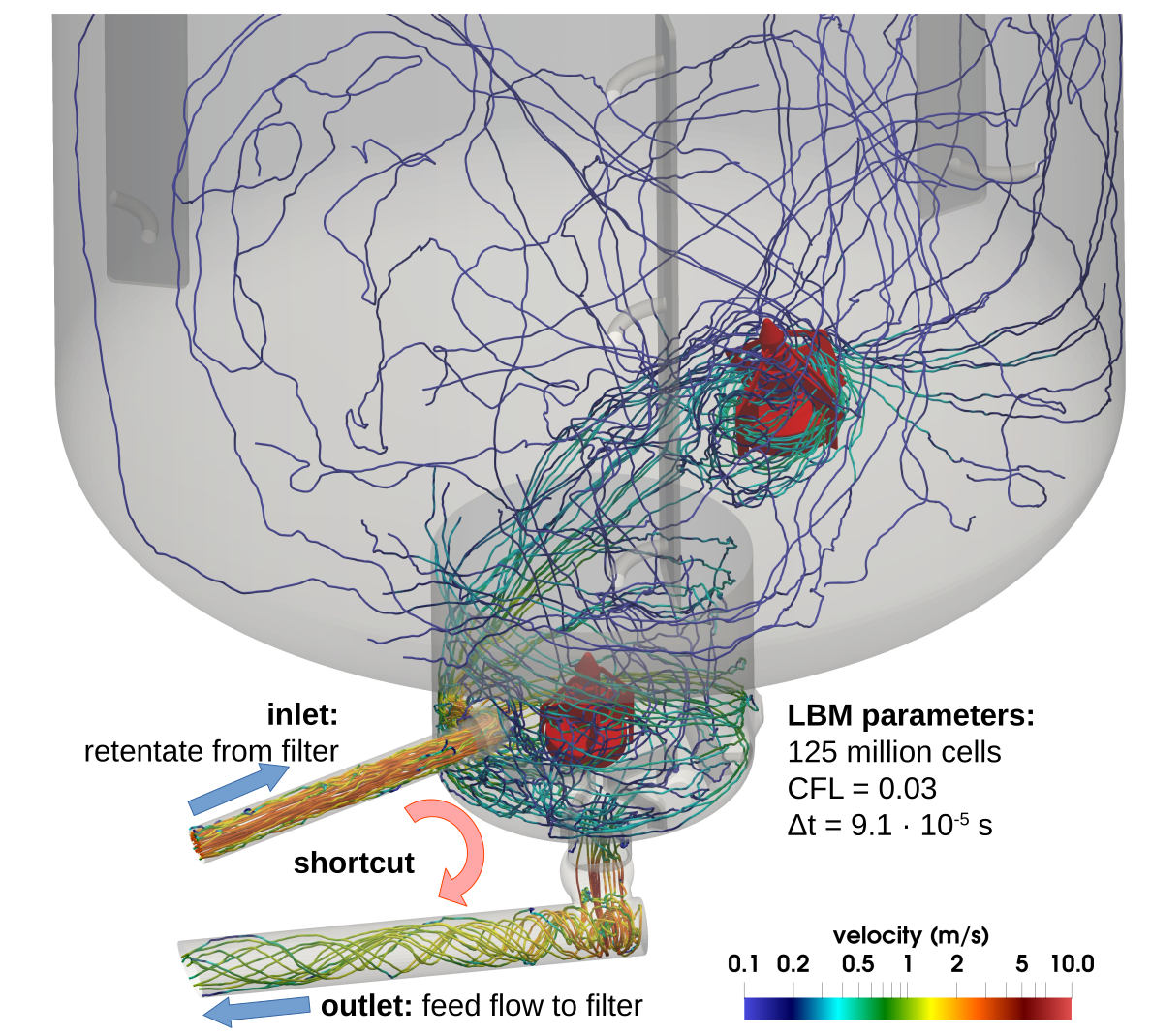
Visualization of streamlines through a tulip vessel showing inlet, outlet, and shortcut path — [1]
simulation:Reactor Network Model + Filtration Model
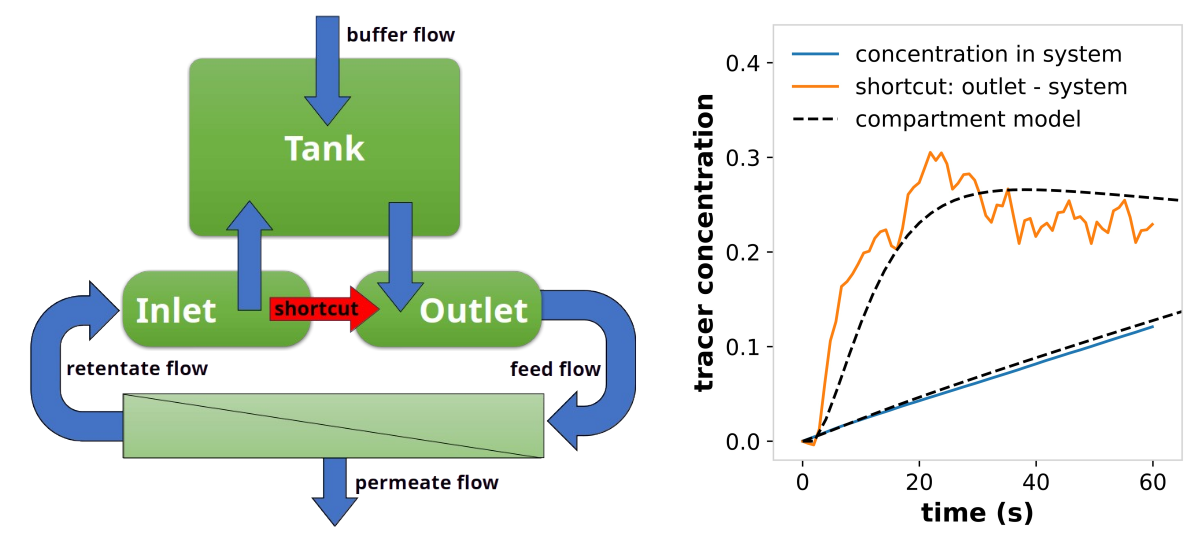
Reactor network model and verification against LBM results — [1]
data:Diafiltration Performance, Material Exchange Time
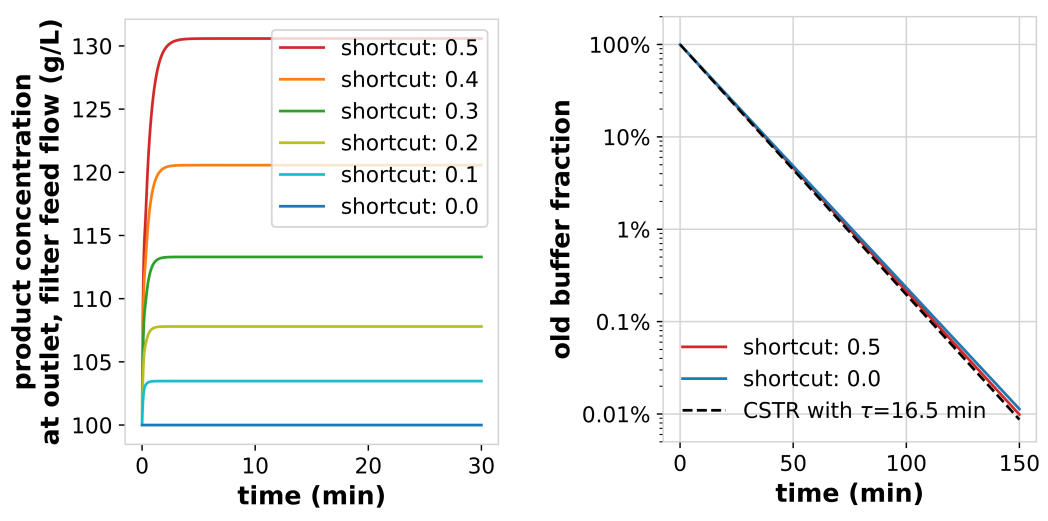
Product concentration increase at vessel outlet (filter inlet) and buffer replacement time — [1]
references
P. Toson, D. Jajcevic, M. Iannuccelli, and W. Lang, "Assessing Shortcut Behavior in Tulip Vessels with Lattice Boltzmann Method and Reduced Order Models," presented at the 2025 AIChE Annual Meeting, Boston. Conference paper link.